
Oculoplastic Surgery
Ectropion & Entropion
- Fast-tracked appointments available
- 0% finance
What Is Eyelid Malposition?
Overview
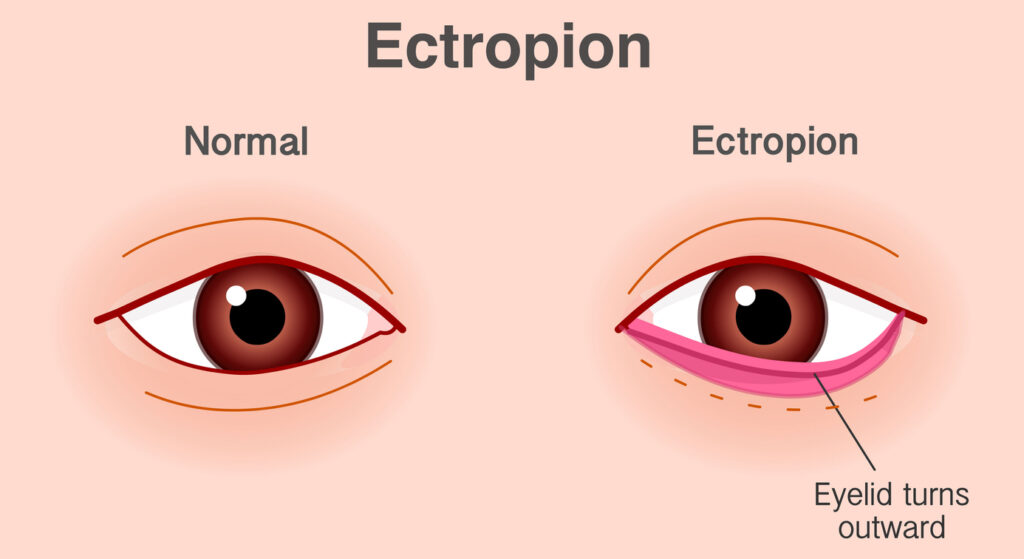
Eyelid malposition refers to conditions in which the eyelid is not sitting in its correct anatomical position relative to the eye. The two most common forms are ectropion — where the lower eyelid turns outward, away from the eye — and entropion — where it turns inward, towards the ocular surface. Both conditions can cause considerable discomfort and, without appropriate treatment, carry a risk of serious complications for the health of the eye.
At Cathedral Eye Clinic in Belfast, Mr Sri Kamalarajah specialises in the surgical correction of both conditions, restoring normal eyelid anatomy and protecting long-term ocular health.

Ectropion: The Outward-Turning Eyelid
What Is Ectropion?
Ectropion is a condition in which the lower eyelid turns outward (everts) so that its inner surface — which should rest in contact with the eye — becomes exposed to the air. This disrupts the normal drainage and distribution of the tear film, causing the eye to water excessively while paradoxically becoming dry and irritated.
Symptoms & Causes of Ectropion
Symptoms
- Persistent watering eye — tears overflow onto the cheek because the punctum (drainage opening) is no longer in contact with the tear lake
- Redness and soreness of the exposed inner eyelid
- Dryness and gritty irritation of the eye
- Recurring eye infections or discharge
- Visible drooping or sagging of the lower lid away from the eye
Causes
The most common cause of ectropion is age-related laxity of the tissues supporting the lower eyelid.
As the horizontal tendons of the lid stretch and weaken over time, the lid loses the tension it needs to remain in contact with the eye. Ectropion can also develop following facial nerve palsy (which weakens the orbicularis muscle responsible for eyelid closure), as a result of scarring from previous surgery or trauma, or as a consequence of chronic skin conditions such as eczema affecting the lower face.
Surgical Treatment of Ectropion
Ectropion repair is performed as a day-case procedure under local anaesthetic. The most common surgical approach is a lateral tarsal strip procedure, in which the stretched lower eyelid tendon is shortened and re-anchored at the outer corner of the eye, restoring the lid to its correct position against the ocular surface.
Some patients may have a degree of cicatricial ectropion, where there is a relative shortage of skin below the eyelid from excessive sun exposure, previous surgery or scarring in the cheek or simply genetic. When this shortage of skin is contributing to the ectropion, a skin graft may be required to provide additional tissue support. This will require a much longer procedure.
Recovery is typically straightforward, with most patients noticing a significant improvement in their symptoms within days of surgery and full healing within four to six weeks.
Entropion: The Inward-Turning Eyelid
What Is Entropion?
Entropion is the inward rotation of the lower eyelid margin, causing the eyelashes to turn inward and make constant contact with the surface of the eye. With every blink — around 15,000 times per day — the lashes rub against the cornea. This is both painful and, over time, potentially damaging, leading to corneal abrasions, scarring, and in advanced cases, significant visual impairment.
Symptoms & Causes of Entropion
Symptoms
- Persistent foreign body sensation — a feeling that something is constantly in the eye
- Eye redness, soreness, and excessive watering
- Sensitivity to light (photophobia)
- Visible inward rotation of the lower eyelid
- Corneal damage or ulceration in advanced or long-standing cases
Causes
Like ectropion, entropion most commonly develops as a result of age-related changes to eyelid anatomy. As tone and elasticity reduce, the lid margin can begin to rotate inward. Cicatricial entropion — where scarring of the inner lining of the eyelid (conjunctiva) pulls the margin inward — can develop following inflammatory conditions including trachoma, severe blepharitis, or ocular cicatricial pemphigoid.
Surgical Treatment of Entropion
The surgical approach to entropion depends on its cause. For involutional (age-related) entropion, the most common procedure combines horizontal tightening of the lower lid with correction of the lid margin rotation, using sutures placed to evert the margin back to its normal position. In cicatricial entropion, more complex reconstruction — including grafting of the inner lid surface — may be required.
For patients awaiting surgery, temporary measures such as lubricating drops, lid taping, and in some cases botulinum toxin injections can help manage symptoms.

Meet your Surgeon

Mr Sri Kamalarajah
Consultant Ophthalmic Surgeon & Glaucoma Specialist
Mr Sri Kamalarajah is a Consultant Ophthalmic Surgeon with a specialist interest in oculoplastic, lacrimal and orbital surgery.
With over 20 years of experience in the field, he brings a wealth of expertise to every procedure he performs at Cathedral Eye Clinic.
Your Patient Journey at Cathedral Eye Clinic
Detailed Consultation
At your consultation, Mr Kamalarajah will assess your eyelid and discuss the symptoms you are experiencing. He will explain the treatment options available, what the procedure involves, and the results you can expect. The consultation is also an opportunity for you to ask questions and make an informed decision in your own time.
Day of Surgery
Ectropion and entropion surgery at Cathedral Eye Clinic is performed as a day-case procedure under local anaesthetic. You will be comfortable throughout, and the procedure is typically completed in under an hour. Mr Kamalarajah’s team will ensure you are fully informed and at ease from arrival to discharge. You will leave with clear written aftercare instructions and contact details should any concerns arise.
Aftercare & Follow-Up
A post-operative appointment will be arranged to review your eyelid position, healing, and any impact on corneal health. Lubricating drops are typically prescribed for a period following surgery. Our team is available throughout your recovery to address any questions, and Mr Kamalarajah will see you in follow-up for as long as is clinically appropriate.
From the moment I arrived staff were very friendly and kept me well informed throughout. Mr Kamalarajah was excellent with his explanation and reassuring throughout my procedure. I did not feel at all rushed and was able to freely ask questions. An excellent experience - thank you to the entire team. Highly recommended.
Verified Patient · Doctify
Investment in your Vision
Cost & Payment Options
At Cathedral Eye Clinic, we believe clear and honest pricing is essential when planning your care.
0% finance available
Initial Consultation
£225
Includes a comprehensive assessment with one of our specialist consultants.
Ectropion & Entropion
from £1300 (unilateral),
£2000 (Bilateral)
Making Treatment Accessible
To make treatment more accessible, we offer interest-free finance options , allowing you to spread the cost over manageable monthly instalments.
Contact our team to discuss personalised pricing and finance options tailored to your needs.
Frequently Asked Questions
What is the difference between ectropion and entropion?
Can these conditions resolve on their own?
Is ectropion or entropion surgery painful?
Will the eyelid turn outward or inward again after surgery?
My eye is constantly watering — could it be ectropion?
How long is the recovery after ectropion or entropion surgery?
What problems can occur after the operation?
Dry, gritty eyes for a few weeks can be helped with lubricant eye drops and ointment. The vision may be slightly blurred for a few days.
A post-operative infection may develop in the lids — they would become tender, red and swollen and the wound may break down. Contact the hospital if this happens, as antibiotics may be needed and the wound occasionally re-stitched once settled.
Tenderness or a lump over the outer corner of the eye, associated with a deep suture, usually settles with time. Rarely, if it persists, the deep suture may need to be removed.
Bleeding after the operation is usually slight and stops within a short time. If it continues, contact the hospital. Extremely rarely, severe bleeding around or behind an eye can cause permanent loss of vision.
Unsightly scarring, persistent eyelid swelling or other unusual skin changes are extremely rare complications.