
Oculoplastic Surgery
Upper Blepharoplasty (Eyelid Surgery)
- Fast-tracked appointments available
- 0% finance
What Is Upper Blepharoplasty?
Overview
Upper blepharoplasty — commonly known as upper eyelid surgery — is a surgical procedure to remove excess skin and, where appropriate, underlying fat and muscle from the upper eyelids.
As we age, the skin around the eyes loses elasticity and begins to droop, creating a hooded, heavy appearance that can make us look permanently tired or older than we feel.
At Cathedral Eye Clinic in Belfast, Mr Sri Kamalarajah performs upper blepharoplasty with a dual focus: restoring a natural, refreshed appearance while ensuring the health and function of your eyes are never compromised.
As a fully trained ophthalmologist and specialist oculoplastic surgeon, Mr Kamalarajah brings a level of anatomical expertise to eyelid surgery that sets him apart from general cosmetic practitioners.

Cosmetic and Functional Benefits
Upper blepharoplasty is both a cosmetic and, in more significant cases, a functional procedure. Drooping upper eyelid skin can begin to obstruct the upper visual field, affecting everyday activities such as driving, reading, and working at a screen. In these cases, surgery is not simply about appearance – it is about restoring clear, unobstructed vision.
Patients most commonly seek upper blepharoplasty for:
Hooded, tired eyes
Heavy, hooded upper eyelids that create a tired or aged appearance
Obstructed vision
Drooping skin that partially obscures peripheral or upper vision
Make-up difficulty
Difficulty applying eye make-up due to excess overhanging skin
Eyelid asymmetry
Asymmetry between the upper eyelids
Loss of confidence
A loss of confidence related to the appearance of their eyes
Suitability
Am I a Good Candidate for Upper Blepharoplasty?
Upper blepharoplasty is suitable for men and women of all ages, though it is most commonly performed on patients over 40. You may be a suitable candidate if you have excess skin causing hooding or heaviness to your upper lids, are in good general health with no untreated eye conditions, and have realistic expectations about what surgery can achieve.
During your consultation, Mr Kamalarajah will carry out a thorough eye examination alongside a detailed assessment of your eyelid anatomy. If there are any concerns about your tear film, eyelid function, or eye pressure, these will be discussed before any surgical plan is agreed.
What Does the Procedure Involve?
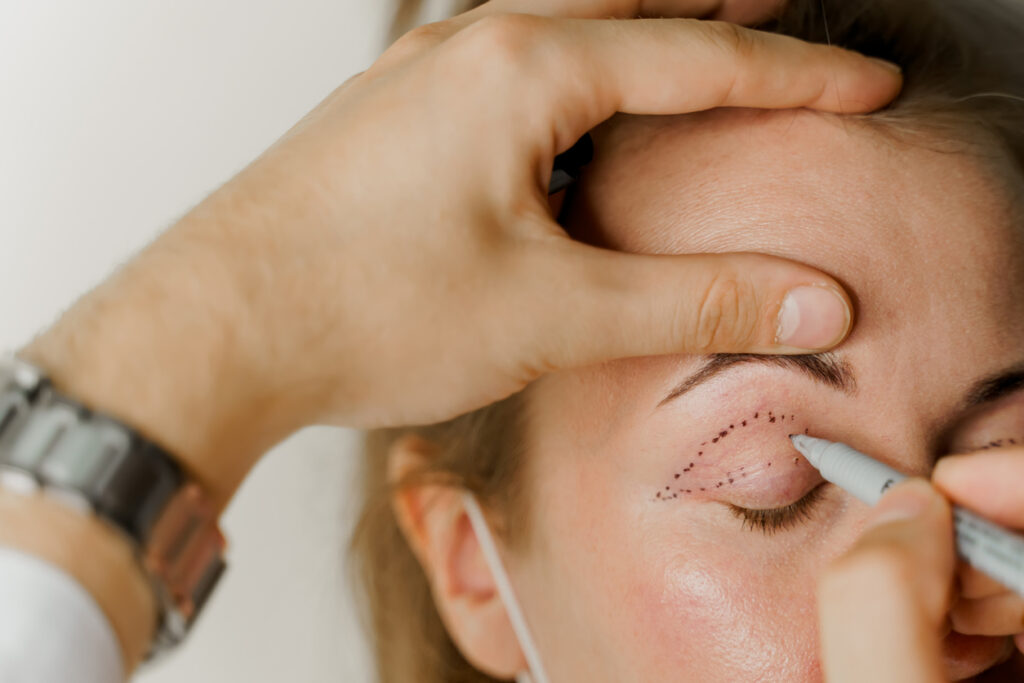
Upper blepharoplasty is performed as a day-case procedure under local anaesthetic, meaning you remain awake but completely comfortable throughout, and can return home the same day. The procedure typically takes 45 minutes to one hour.
Incisions are made along the natural crease of the upper eyelid, ensuring that any resulting scar sits within the existing skin fold and becomes virtually invisible once fully healed. Carefully measured amounts of excess skin — and fat where appropriate — are removed before the incisions are closed with fine sutures.
The precision with which the amount of tissue removed is calculated is critical: too little and the result may be underwhelming; too much and eyelid closure can be compromised. Mr Kamalarajah’s training as an ophthalmologist means this balance is managed with both aesthetic and clinical precision.
Recovery After Upper Blepharoplasty
Most patients are comfortable returning to desk-based work within 7 to 10 days. The fine suture line within the eyelid crease fades progressively over the following months and is typically imperceptible once fully healed.
Bruising & swelling
Mild to moderate bruising and swelling for 7 to 14 days
Cold compresses
Cold compresses applied in the first 48 hours to reduce swelling
Head elevated
Head kept elevated when resting to minimise fluid retention
Rest from exertion
Avoidance of strenuous activity and heavy lifting for two weeks
No contact lenses
Contact lenses avoided for one to two weeks post-surgery
Sunglasses outdoors
Sunglasses recommended outdoors during the healing period
Why Cathedral Eye Clinic
Why Choose Cathedral Eye Clinic for Upper Blepharoplasty in Belfast?
Upper eyelid surgery demands both surgical precision and aesthetic judgement. The eyelids are among the most delicate and functionally important structures in the body — the result of any surgery here must look natural while preserving the full health and movement of the eye.
Mr Sri Kamalarajah is a consultant ophthalmologist and oculoplastic surgeon with extensive experience in upper eyelid surgery. His practice is grounded in evidence-based outcomes, and as an active clinical researcher he ensures that patients at Cathedral Eye Clinic benefit from the most current techniques available.
To find out whether upper blepharoplasty is right for you, book a consultation with Mr Sri Kamalarajah at Cathedral Eye Clinic, Belfast.
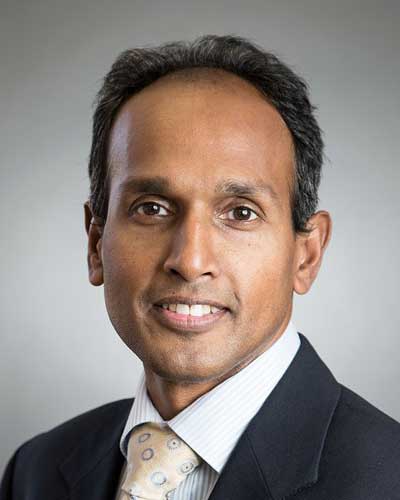
Meet your Surgeon

Mr Sri Kamalarajah
Consultant Ophthalmic Surgeon & Glaucoma Specialist
Mr Sri Kamalarajah is a Consultant Ophthalmic Surgeon with a specialist interest in oculoplastic, lacrimal and orbital surgery.
With over 20 years of experience in the field, he brings a wealth of expertise to every procedure he performs at Cathedral Eye Clinic.
Your Patient Journey at Cathedral Eye Clinic
Detailed Consultation
Your journey begins with a detailed one-to-one consultation with Mr Sri Kamalarajah. During your appointment, you will have the opportunity to discuss your concerns, expectations, and suitability for surgery in full. Mr Kamalarajah will explain the procedure, the results you can expect, and what recovery involves. As every patient is different, your treatment plan will be tailored specifically to you.
Day of Surgery
Upper blepharoplasty at Cathedral Eye Clinic is performed as a day-case procedure — you will arrive, have your surgery, and return home on the same day. The area around your eyes will be carefully anaesthetised so that you remain entirely comfortable throughout. Mr Kamalarajah and his team will look after you from the moment you arrive, and you will receive clear written instructions before you leave.
Aftercare & Follow-Up
Mr Kamalarajah and the Cathedral Eye Clinic team will provide detailed aftercare guidance following your surgery. You will be seen for a post-operative review to assess your healing, and our team is available to answer any questions that arise during your recovery. Most patients experience some bruising and swelling for one to two weeks, and see their final, natural result within six to eight weeks of surgery.
My experience was excellent the staff are so polite and friendly everyone makes you feel relaxed and comfortable. The place is spotless. I would highly recommend Cathredral Eye Clinic.
Verified Patient · Doctify
Investment in your Vision
Cost & Payment Options
At Cathedral Eye Clinic, we believe clear and honest pricing is essential when planning your care.
0% finance available
Initial Consultation
£225
Includes a comprehensive assessment with one of our specialist consultants.
Upper Blepharoplasty
from £3,250 (Unilateral),
£4,500 (Bilateral)
Making Treatment Accessible
To make treatment more accessible, we offer interest-free finance options , allowing you to spread the cost over manageable monthly instalments.
Contact our team to discuss personalised pricing and finance options tailored to your needs.
Frequently Asked Questions
What is the difference between upper blepharoplasty and a brow lift?
Will my scars be visible after upper eyelid surgery?
Is upper blepharoplasty performed under general or local anaesthetic?
How long do the results of upper blepharoplasty last?
Can upper blepharoplasty help if my eyelids are affecting my vision?
What is the minimum age for upper blepharoplasty?
What problems can occur after the operation?
Dry, gritty eyes for a few weeks can be helped with lubricant eye drops and ointment. The vision may be slightly blurred for a few days.
A post-operative infection may develop in the lids - they would become tender, red and swollen and the wound may break down. If this happens then you should contact the hospital since antibiotic tablets may be needed to help correct this and allow the lids to heal. It might be necessary to restitch the wound once the infection has settled.
Bleeding after the operation is usually slight and stops within a short time. If bleeding continues you should contact the hospital in case further treatment is required. Extremely rarely, severe bleeding around or behind an eye can cause permanent loss of vision.
Very rarely, too much skin is removed and if this causes problems with lid closure and dry eyes, skin will need to be replaced.
Sometimes some loose skin persists, often at the outer end of the eyelid, and further surgery may be required if it is still causing a visual problem.
Unsightly scarring, persistent eyelid swelling, or other unusual skin changes are extremely rare complications.